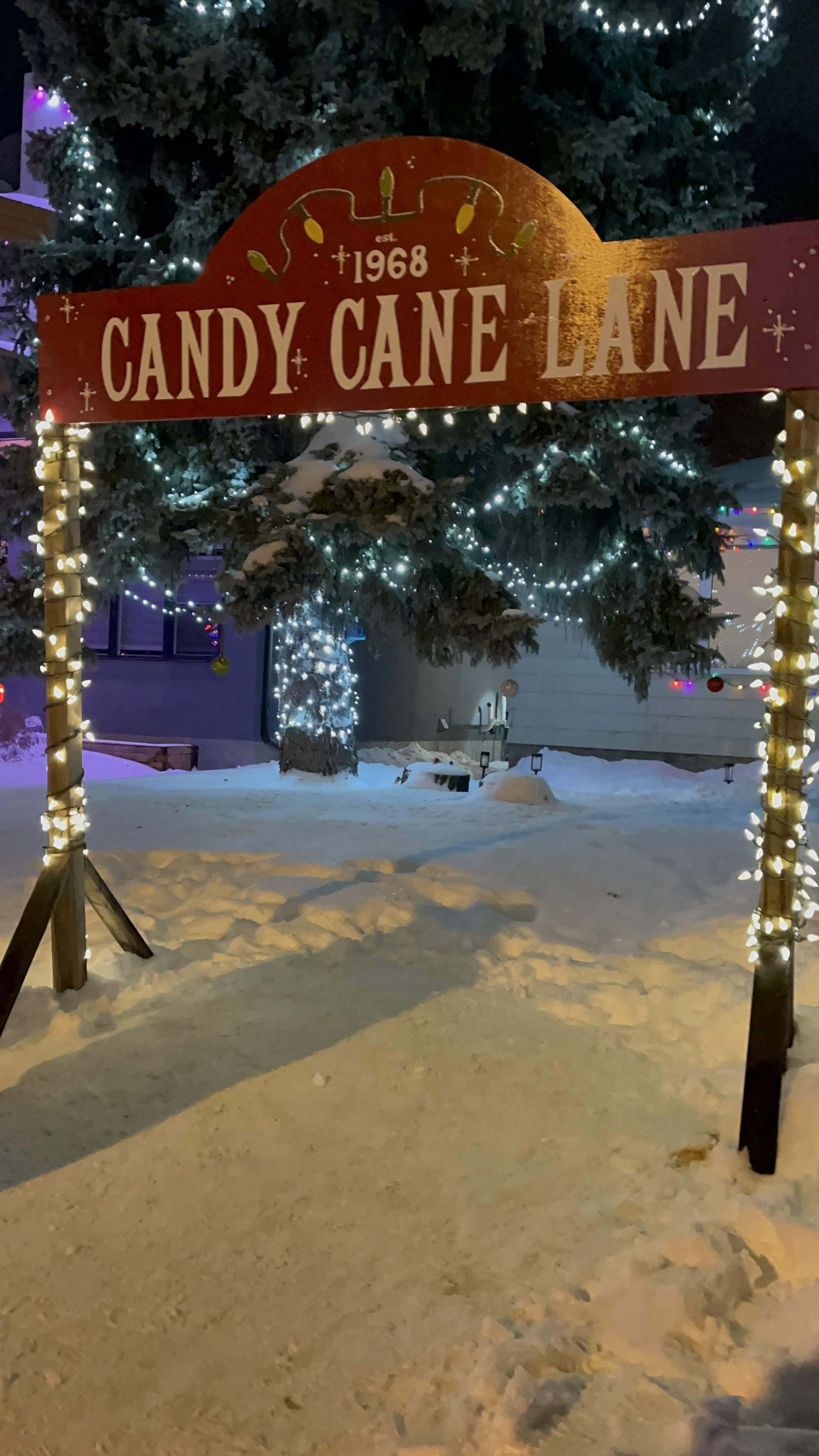
Walking Candy Cane Lane: A Local’s Winter Tradition

Every winter in Edmonton, there is a quiet ritual that asks for very little. No tickets to buy. No reservations to make. No announcements to follow. It begins simply—with winter boots lined by the door, scarves pulled close against the cold, and a deliberate choice to step outside into the night.
The walk leads to a glowing street known as Candy Cane Lane, where homes become soft beacons of light against the dark winter sky. The air feels sharper, the pace instinctively slower. Footsteps crunch on snow. Breath turns visible. For a moment, the world narrows to the sound of boots, the warmth of shared silence, and the gentle glow ahead.
For locals, walking Candy Cane Lane isn’t just about Christmas lights or decorations. It’s about tradition—one that returns year after year, steady and familiar, no matter how much life shifts in between. People come as they are: children bundled in layers, couples walking hand in hand, families returning with stories from past winters, and individuals seeking a quiet moment of reflection.
Some years look different than others. People change. Seasons pass. But Candy Cane Lane remains—a constant reminder that not everything needs to move fast or change quickly. Some traditions are meant to be walked, slowly and intentionally, carrying memories from one winter into the next.
“Seeing is believing, but sometimes the most real things in the world are the things we can’t see.”
— The Conductor, The Polar Express
A Street That Feels Like Home

Candy Cane Lane sits in the Crestwood neighbourhood, where homes transform into hand-lit stories of Christmas cheer. Wooden cutouts, glowing arches, classic holiday characters, and carefully arranged lights line the street. Nothing feels rushed or commercial. Instead, it feels personal — like neighbours inviting the city to share in something they’ve lovingly built.
Walking instead of driving allows you to truly see it all. You notice the details: the hand-painted faces on wooden figures, the soft hum of lights, the way snow reflects every color. You hear laughter, quiet conversations, boots crunching on snow.
It’s a reminder that some traditions are meant to be experienced slowly.
“Seeing is believing, but sometimes the most real things in the world are the things we can’t see.”
— Conductor, The Polar Express (2004)
Why Choose to Walk Candy Cane Lane
1. Walking Creates Space to Breathe
In a season filled with noise, walking Candy Cane Lane offers something rare — stillness. There’s no destination to rush toward. The walk itself is the point.
“Sometimes you have to slow down to go fast.”
— Lightning McQueen, Cars (2006)
2. It Feels More Personal
Driving through shows you the lights. Walking lets you feel the atmosphere. The warmth from fire pits on special nights, the shared smiles with strangers, the quiet joy of simply being there.
“The real gifts are the moments we share.”
— Narrator, The Christmas Chronicles (2018)
3. It Becomes a Memory, Not Just a Visit
Many locals return year after year — as kids, as couples, as parents, or simply as themselves. The walk becomes layered with memories, each year adding another chapter.
“The memories we make with our family is everything.”
— Walt Disney quote, often referenced in Disney films

What to Expect When Walking Candy Cane Lane
Location: Crestwood neighbourhood, Edmonton
Best time: Early evening (5:00–7:00 PM)
Duration: 30–60 minutes depending on pace
Cost: Free
Bonus: Bring a donation for the Edmonton Food Bank
Walking nights can be busier closer to Christmas, but even on crowded evenings, there’s a shared patience — as if everyone understands that this tradition isn’t meant to be rushed.
“Life moves pretty fast. If you don’t stop and look around once in a while, you could miss it.”
— Ferris Bueller, **Ferris Bueller’s Day Off (198


What to Wear for the Walk
Comfort matters more than fashion, but winter style still plays a role:
Warm boots with good grip
Long coats or parkas
Scarves, mittens, and hats
Neutral colors photograph beautifully against the lights
The colder the night, the cozier the experience feels.
A Tradition That Gives Back
One of the most meaningful parts of Candy Cane Lane is its long-standing support for the Edmonton Food Bank. Visitors are encouraged to bring non-perishable food items, turning a simple walk into an act of generosity.
It’s a quiet reminder that community is built not just through celebration, but through care.
“The smallest act of kindness is worth more than the grandest intention.”
— Oscar Wilde (often quoted in literature)
The Emotional Side of the Walk
There’s something about winter walks that invites reflection. Maybe it’s the cold air or the way lights glow against the dark. Walking Candy Cane Lane often brings a gentle pause — a moment to think about the year that’s ending and the one ahead.
Some walk hand in hand. Others walk alone. Both feel equally right.
This tradition doesn’t demand happiness. It simply offers presence.
“You don’t have to understand life. You just have to live it.”
— Paulo Coelho, The Alchemist


Why This Tradition Endures
Candy Cane Lane has lasted for decades not because it changes every year, but because it doesn’t need to. Its beauty lies in consistency. In knowing that even when life feels uncertain, some lights will still turn on — quietly, faithfully — every winter.
A Walk To Remember

Walking Candy Cane Lane is one of those experiences that quietly reminds you why winter traditions matter. Not because they are grand, trendy, or constantly changing, but because they return—year after year—steady and familiar. They ask nothing more than your presence. They hold space for memory, for community, and for moments of stillness that are becoming increasingly rare.
With each walk, the experience layers itself with meaning. You remember who you walked with before, the conversations that drifted between houses, the winters that felt heavier or lighter than this one. Even without trying, the lane becomes a timeline—proof that life moves forward, yet some things remain gently unchanged.
In a world that often asks us to move faster, do more, and fill every moment with noise, this tradition offers something different. It doesn’t demand excitement or constant joy. Instead, it quietly invites us to slow down, to notice what’s in front of us, and to simply be where we are. And in that unhurried space, something settles—reminding us that sometimes, showing up and walking slowly is enough.

As the lights of Candy Cane Lane fade behind you and the crisp winter air brushes your cheeks, it becomes clear that this tradition is about more than decorations or spectacle. It’s about presence—the quiet joy of noticing, the gentle warmth of community, and the comfort of something that returns each year, unchanged yet alive with memories. Whether you walk alone, with friends, or with family, the experience lingers long after your boots leave the snow. It reminds us that the simplest traditions often hold the deepest meaning, grounding us in a season that can otherwise feel rushed and fleeting.
And perhaps that is the real magic of Candy Cane Lane: it asks nothing of us but our attention. In a world that hurries, it offers stillness. In a season filled with noise, it offers quiet. And in our busy lives, it reminds us why returning to simple, meaningful traditions matters.
Do you prefer walking or driving through Candy Cane Lane — and why?
Your feedback matters! If you have any comments or suggestions, feel free to leave them anytime. I appreciate hearing from you!
#Candy Cane Lane Edmonton #Walking Candy Cane Lane #Edmonton winter tradition #Crestwood Edmonton #Edmonton Christmas lights #Winter in Edmonton #Things to do in Edmonton winter #Canadian winter traditions #Christmas in Edmonton #Slow living winter #Local traditions Canada #Winter reflections #A Walk To Remember #FamilyLove #Travels
Leave a Reply